

Are you preparing for your 8th Class Urdu exam for the Punjab Boards in 2025–26? Do you want to maximize your marks and focus only on the most important topics? Understanding the Urdu Pairing Scheme can make a huge difference in your preparation. In this guide, we’ll break down the entire scheme for you, including multiple-choice questions, short questions, composition, and deleted syllabus.
Understanding the Pairing Scheme
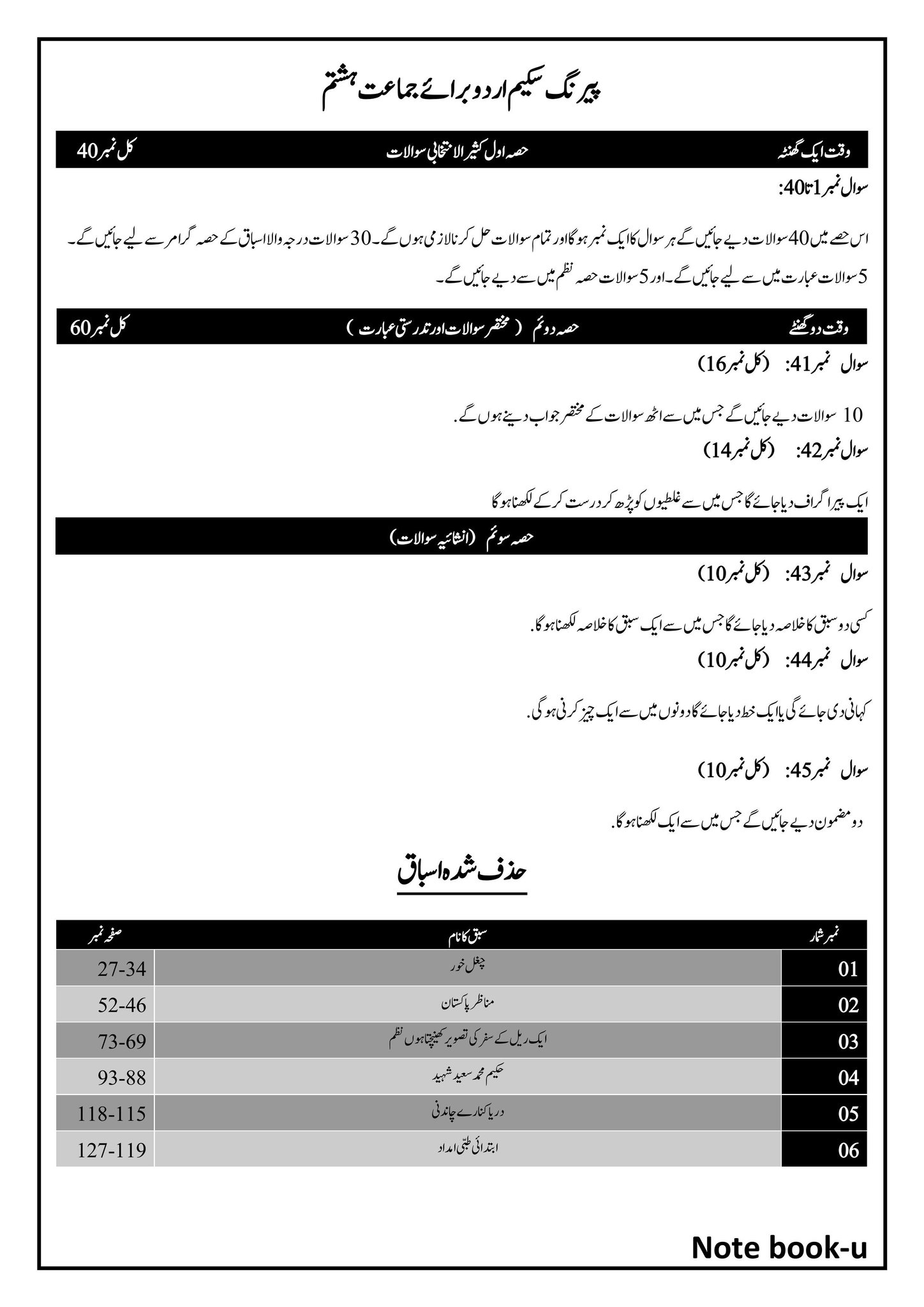
The 8th Class Urdu Pairing Scheme is designed to help students focus on the key areas of the syllabus, saving time and ensuring better exam performance. The Gujranwala Board, along with other Punjab Boards, has outlined a clear pattern for the session 2026.
The total marks for the Urdu exam are 100, divided into three main parts:
Part One: Multiple Choice Questions (MCQs) – 40 Marks
This section carries 40 marks. Students are required to attempt 40 questions, with each question carrying 1 mark.
- Textbook-based Questions: 30 questions will come directly from textbook lessons. Focus on important chapters, examples, and highlighted points.
- Grammar: 5 questions will test your understanding of Urdu grammar rules, sentence structures, and proper usage.
- Poetry/Verses: 5 questions will be based on poems or verses from the textbook. Memorizing key couplets and their meanings can help you score easily.
Tip: Pay attention to questions that often repeat in past papers; these are usually emphasized in the pairing scheme.
Part Two: Short Questions & Paragraph Writing – 60 Marks
This part is divided into two sections:
- Short Questions (16 Marks): Attempt any 10 questions from the given options. Focus on clear, concise answers that directly address the question.
- Paragraph Writing (14 Marks): Write a short paragraph on one of the given topics. Use proper sentence structure, good vocabulary, and a logical flow.
Tip: Practice writing paragraphs on common themes like education, environment, or national heroes. This will help you quickly compose answers during the exam.
Part Three: Composition – 30 Marks
This section includes essay writing, letter writing, and passage summary:
- Essay Writing (10 Marks): Choose one topic and write an essay. Include an introduction, main body, and conclusion. Examples and personal experiences make essays more engaging.
- Letter Writing (10 Marks): You may be asked to write a formal or informal letter. Remember the correct format and polite language for formal letters.
- Summary Writing (10 Marks): Summarize the given passage in your own words. Focus on main points, and avoid copying sentences directly from the text.
Deleted Syllabus
It’s equally important to know what has been removed from the syllabus to avoid wasting time:
| Sr. No. | Lesson Title | Page Numbers |
|---|---|---|
| 01 | Chacha Khoor | 27–34 |
| 02 | Musafir-e-Pakistan | 46–52 |
| 03 | A Child’s Description of Kashmir | 69–73 |
| 04 | Hakeem Muhammad Saeed | 88–93 |
| 05 | Daryaein Aur Pani | 115–118 |
| 06 | Inshaaiyah – Selected Paragraphs | 119–127 |
Tip: Avoid studying these deleted lessons as they will not appear in the 2025–26 exam. This saves time and allows you to focus on important chapters.
How to Prepare Using the Pairing Scheme
- Prioritize Textbook Questions: Start with lessons emphasized in the pairing scheme.
- Practice Grammar and Poetry: These sections are small but scoring. Make short notes for revision.
- Write Sample Paragraphs & Essays: Improve writing speed and clarity by practicing daily.
- Time Management: During the exam, allocate time wisely: 1 hour for MCQs, 2 hours for short questions and composition.
- Revise Deleted Syllabus: Ensure you focus only on the current syllabus.
By following the 8th Class Urdu Pairing Scheme, students can prepare efficiently, improve their scores, and perform confidently in the exam. Remember, understanding the scheme is as important as studying the content.
Conclusion
The 8th Class Urdu exam for Punjab Boards in the 2025–26 session is manageable if you focus on the right areas. Stick to the pairing scheme, practice regularly, and revise consistently. With the right strategy, you can ace your Urdu exam and secure excellent marks.